
about
VISION
Recognizing history as the ultimate determinant of health, we seek social and political justice to manifest equity in healthcare.
MISSION
To share a life philosophical framework on the meaning of service and of community.
To build resilience and leadership among students from underserved communities to meet the future challenges in community health.
•To provide experiential opportunities to students from underserved communities to explore community health issues and health career options.
•To build connected community health career pathways across academic levels.
-
The AANHPI population comprises over 70 distinct linguistic groups, representing 17% of California's population and 31% of Alameda County's population. The historical trajectory of these communities is shaped by diverse structural forces, including racism, colonialism, geopolitics, regional conflicts, forced migration, and socioeconomic displacement. Consequently, the specific health disparities of indigenous populations as well as newly arrived immigrants and refugees risk being obscured when aggregated alongside data from socioeconomic integrated segments of the broader Asian American demographic.
Ostensibly, directories of premier medical institutions suggest an adequate supply of Asian American healthcare providers. However, community health centers, public hospitals, and small practices face severe difficulties recruiting clinical and administrative personnel who possess the cultural humility, sociological insight, and linguistic competence required to serve vulnerable Asian American, Native Hawaiian, and Pacific Islander (AANHPI) populations. This demographic includes indigenous populations, immigrants, refugees, undocumented individuals, and other marginalized groups.
This disparity highlights a paradoxical challenge in addressing the health needs of underserved AANHPI communities. While superficial metrics indicate a sufficient clinician supply, granular analysis reveals critical deficits in community-oriented recruitment and in holistic medical training. The current criteria used to select candidates for graduate and professional schools lean heavily on academic metrics and not on commitment to community health. This is further reinforced in professional schools with curricula neglecting the historical and sociocultural determinants of health, such as racism, macroeconomic conditions, cultural frameworks, and religious paradigms that shape patient experiences and health outcomes. Shaping a comprehensive strategy to build career pathways for community health is essential to the recruitment, training and retention of future healthcare leaders and policy advocates who are committed to return to underserved communities to enhance health equity and clinical care.
The key elements of a comprehensive community health pathway strategy include:
1. linkages of new and ongoing pathway programs across educational levels;
2. training on community history, health justice and health career options;
3. involvement of intergenerational role models and mentors; and
4. provision of community engagement opportunities;
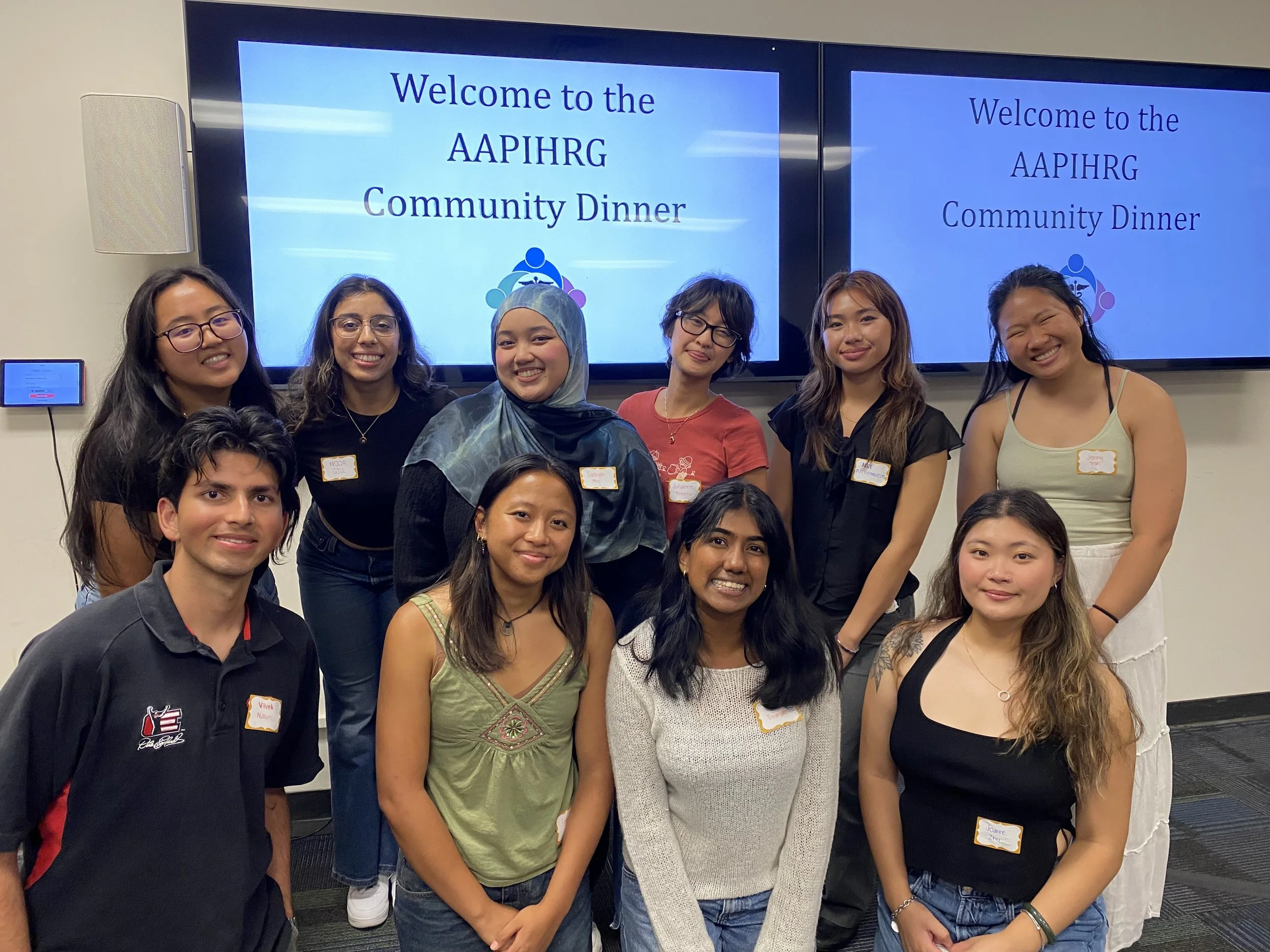
With the above strategy in mind, Pathways for AANHPI Community Health (PACH – pronounced “patch”) was launched in 2021 by a tri-partnership of students, community members and academicians. This tri-partnership was formed by the Asian American Pacific Islander Health Research Group (AAPIHRG), the National Council of Asian Pacific Islander Physicians (NCAPIP) and the Asian American Research Group at UC Berkeley.
We look forward to forming partnerships, collaborations and sharing experiences with interested individuals, institutions and organizations. Contact us at pach.berkeley@gmail.com
-
Are you interested in community health and wish to dive deeper? Want to learn about AANHPI history? Confused about how to select a major for “pre-health”?
Come join us for Community Health Thursday T.E.A. to explore ideas, options, pathways, opportunities, and more.
Contact PACH at pach.berkeley@gmail.com
-
Are you working in community health? Do you wish to share your journey and information about your health career(s)? What do you wish someone had told you when you were in high school, college or professional schools?
Contact PACH at pach.berkeley@gmail.com